
How the Thin Body Standard Took Hold in the Fashion Industry

To become a model, you have to meet strict requirements. A model must be tall and have flawless skin and hair... But the key criterion, and the one most often criticised, is that a model's body measurements must match set standards. So where did these requirements come from, and why have they not changed? 
Looking at fashion as a practice helps explain how the thin ideal became established in the fashion industry. It becomes clear that this particular aspect of today's consumer culture is partly shaped by technical constraints within the production system itself.
In fashion, slimness took hold after clothing production was industrialised. This happened after the Second World War, when haute couture began giving way to ready-to-wear clothing.
Alongside the industrialisation of fashion, a technical device made it possible to impose the thin ideal: the clothing size system. The point is that the dominance of the slim body was driven less by the choices of fashion designers or companies than by the emergence of the concept of size and its use in producing and selling clothes. The thin ideal was, rather, a consequence of a new practice that prevailed in fashion in the second half of the 20th century with the introduction of the clothing size system.
In the world of haute couture, the size system was used very little. When a garment is made to measure, there is no need to work to a size, because measurements are taken directly on the body and the garment is fitted to the person who will wear it. In fact, slimness was never a dominant value in haute couture. The thin body became popular when the sizing system appeared together with the shift to mass production. The clothing size system was understood as a way to make buying easier in the context of mass production.
The main advantage of the size system is that it makes standardisation easier, and it does so in several ways: (1) it stabilises measurements, and therefore the operation of machines and the storage, distribution and sale of goods, which lowers costs; (2) it rationalises the use of fabric and so reduces waste; 3) it simplifies product variation, making it easier to derive changes from a single original model created in a base size. For all these reasons, the standardisation created by the size system gives industrial clothing production considerable economic advantages.
However, deriving other sizes from a single original model has consequences. It sets a limit on how far the size system can be adapted to larger bodies.
Up to size 42, if the original garment is reproduced by enlarging all measurements proportionally, a large share of the population concerned can be dressed acceptably. Above size 42, however, body measurements often no longer change proportionally: they grow more at the sides, hips, bust or stomach. From size 42 upwards, it becomes almost impossible to standardise how a garment falls on the body (waist, hips).
For example, a designer devoted to plus-size fashion has to recalculate her designs several times. The designer also has to pay particular attention to the fabric of the garment and the proportions of the body wearing it. That is why, for fittings and fashion collections, designers find it more convenient to hire models in sizes 32 or 34, the so-called sample sizes, whose bodies do not distort the clothes they wear.
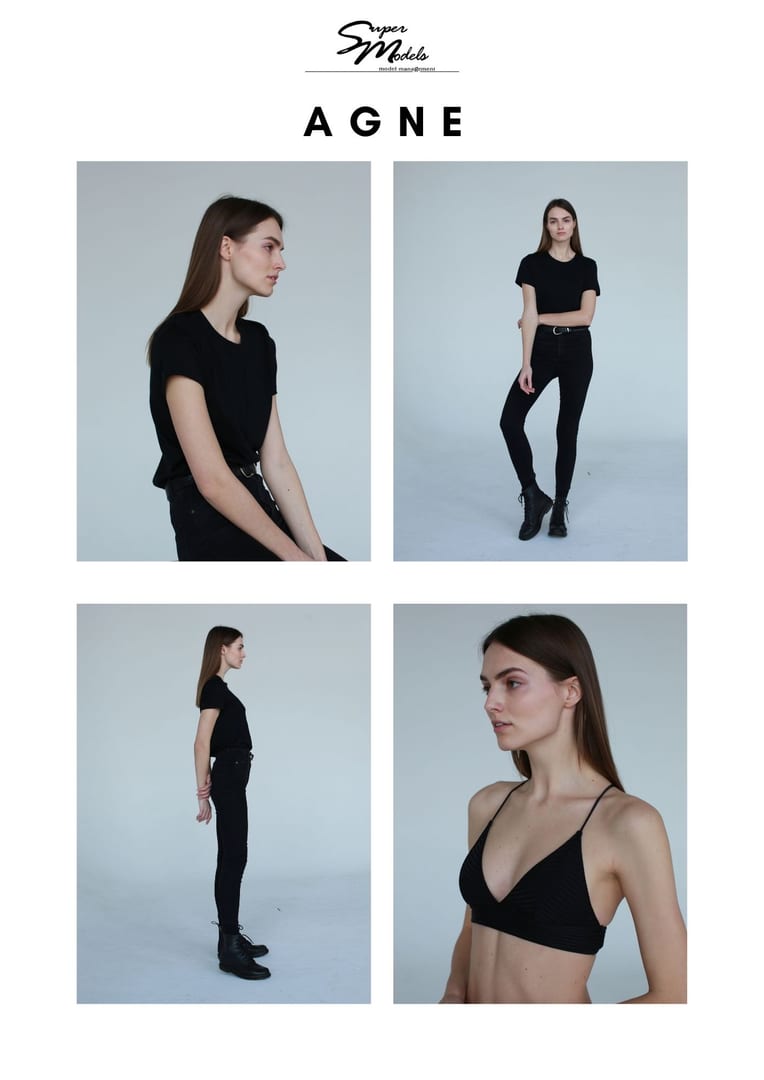
It seems that slimness is more a consequence of this fact than its cause. The thin body ideal grew up together with a fashion industry for which producing for larger body types was technologically inconvenient, and that is how this practice emerged. It happened in two main ways. First, an industry with a strong incentive to produce small sizes develops communication that fits its goals and therefore focuses on small sizes. Second, in a system based on standardised sizes, having a standard size became an increasingly important requirement for professional models.
As a result of these industry practices, the fashion industry produced images of bodies thinner than those of most women. These images, and the collective imagination connected with them, make up a large part of the culture of thinness that is widespread in late modern society.
In summary, we can no longer regard the thin ideal as a cultural element that invaded the world of fashion, or one that the fashion industry adopted and then reinforced for commercial purposes. Instead, it developed together with the practice of fashion, intertwined with a range of elements (technologies, people, tastes, images) that together determine what the practice of fashion means today.

Source:
The thin ideal and the practice of fashion
Paolo Volonté (2017)
Read also
- Model measurements: height, waist, hips and moreProfessional models must meet strict standards for age, height and bust, waist and hip measurements. Here is what model agencies look for in women and men, and how requirements vary by market.
- Plus-Size ModelsPlus-size modelling is one of the fastest-growing sectors of the fashion world. Here is who can become a plus-size model, what work they do and how to get started.
- Model Agencies in Lithuania: the Complete ListA complete guide to model agencies in Lithuania: seven ways to check an agency is reliable, M.A.M.A. member agencies, other agencies, casting agencies and studios, and agencies that have closed.